
Going cloud: the why and the how
Cloud computing helps you cut IT costs. But its real value goes far beyond saving money.
What is this about?
Let's start simple. Whatever "the cloud" may mean technically, the first thing that drives most company decisions is cost. The top reason for going cloud is, naturally, to reduce it.
But cloud computing is much more than just cost reduction — at least in the conventional sense. For a startup, it's the fastest route to market. For an established business running on-premise infrastructure, the cloud can transform both operations and strategy.
IT leaders already know this, but decision-makers at every level should also understand how cloud adoption ties into broader business goals. This is especially true when large-scale ICT infrastructure is central to service delivery.

So, let's first understand what "the cloud" really is. Then we'll explore the cost of not going cloud, and finally, a high level overview on how to get there the right way.
Getting to know the cloud
At its core, cloud computing means accessing computing resources (like storage, applications, or servers) over a network (public or private), in a flexible, scalable, efficient, and reliable way.
These four qualities — flexibility, efficiency, reliability, and scalability — capture nearly everything the cloud promises. They also highlight what traditional on-premise infrastructure often struggles to deliver.
They are the shared language of every business, regardless of industry. So, when evaluating any cloud offering, measure it by how well it strengthens these four qualities. Every benefit like cost savings, growth, agility, or innovation stems from them, alone or in combination.
That said, a few caution flags are worth noting. Data sits at the center of most cloud concerns, especially regarding ownership, privacy, and security. The relationship between your data and the cloud (particularly public cloud) can get complex. We'll come back to that later. For now, let's return to understanding the cloud concept more.
In terms of what your business needs, computing services can be software, storage, a platform to run your business operation and analytics on, even a network infrastructure that connects your devices and branches. This is where the most famous acronymic cloud computing terms come in and express all the services you need shortly as SaaS, PaaS, IaaS, which are collectively and technically called service models.
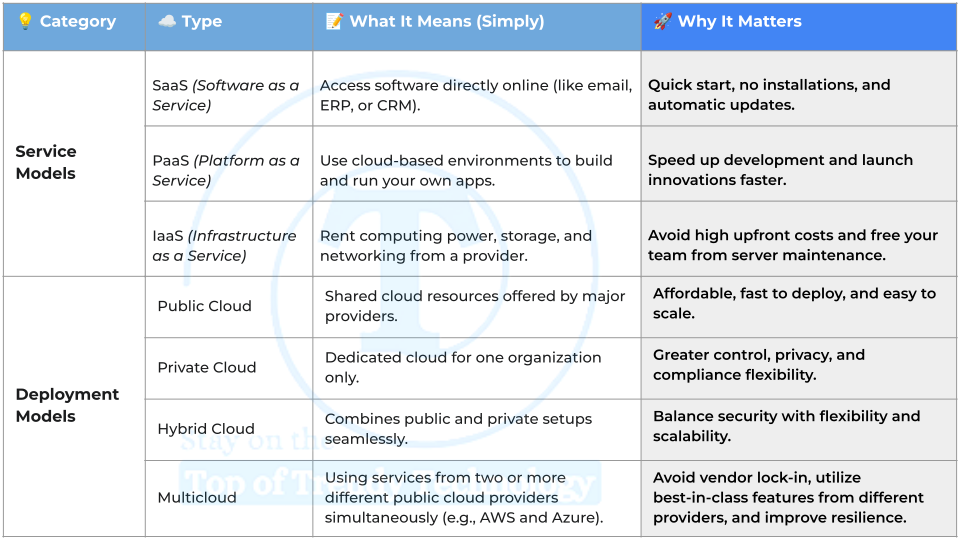
Service models and deployment models of the cloud, along with its key characteristics, provide most of what you need to know about the cloud at a higher level. These concepts are summarized in the table placed just above here, including an additional column on what those things mean for your business.
As a bridge to the next phase of this mini journey and to summarize this cloud concept, it is important distinguish between an ICT infrastructure and the services we get from it. What we all need is the services, not the infrastructure itself. The cloud is a way of getting just those services by freeing us from the burden of owning and managing the infrastructure.
The cloud enbales avoid the burden of owning and managing IT Infrastructure yet get the services we need from it in a flexible, efficient, reliable, and scalable way.
The cost of not going cloud
The most obvious cost is financial. Need for higher CapEx, inefficient utilization of OpEx. But the real loss goes deeper: reduced flexibility, limited scalability, slower innovation, and the inability to quickly adapt your business model.
By adopting the cloud, organizations avoid massive upfront ICT spending and eliminate most maintenance overhead. But the real value comes from operational efficiency, not just financial relief. Cloud-based systems tend to perform better, scale faster, and foster collaboration more naturally. The visual below depicts a slice of what we are trying to tell you.
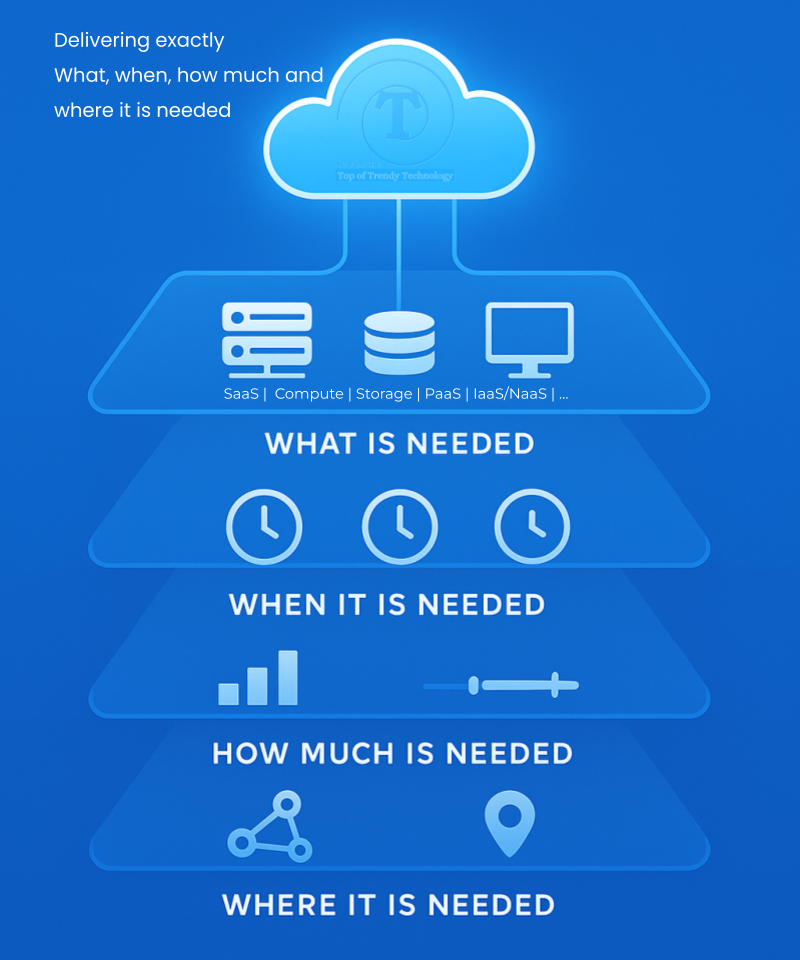
What the picture is trying to demo can also be expressed in terms of three of the four important values the cloud is supposed to deliver: scalability, efficiency and flexibility. These are the weak sides of the alternative, the on-premise IT infrastructure. The cost of no going cloud is losing these three, at least!
All in all, the merits of cloud computing highly outweighs the issues that can pop with its adoption. But the most important take should be the way you adopt makes the difference.
Reality Check
Let's address the elephant in the room. Is Cloud a One-Size-Fits-All Solution?
Not quite. While the cloud brings immense benefits, it isn't perfect or universally applicable. Common concerns include:
- •Data governance (privacy, compliance, sovereignty)
- •Latency and performance issues
- •Cost overruns from poor planning
- •SLA breaches or dependency on providers
Many of these were major issues in the early days of cloud computing, but technology has matured. Today, latency, privacy, and compliance are largely manageable, provided that the migration is well-architected and context-aware.
💡 Key Takeaway: Cloud adoption is not a "yes or no" decision — it's a strategic design choice.
Still, some businesses can't rely fully on public cloud solutions. Highly regulated or risk-sensitive operations might be better served by private or hybrid cloud setups, balancing control with scalability. Hence the bold fact in short is: cloud adoption is not a "yes or no" decision — it's a strategic design choice.
Let's go cloud! But how?
Moving to the cloud isn't just a technical step; it's a strategic transition. It requires a clear understanding of your:
- •Business goals and processes
- •Data sensitivity and compliance requirements
- •Scale and expected growth
- •Desired control and flexibility
Selecting the right provider and architecture depends on these. It's not about chasing trends but about aligning technology strategy with business strategy.
As we sign out, here is what we recommend: focus on the core of your business strategy and management, and let the experts handle the technology strategy.